
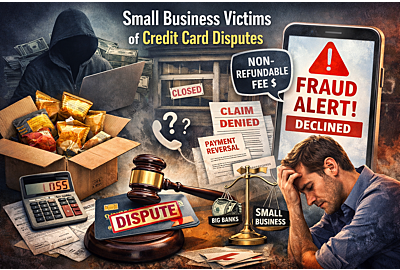
Credit Card Disputes: The Unfair Burden Small Businesses Keep Paying
Chargebacks and “fraud disputes” were built to protect consumers. But the way the system works today often turns small businesses into the default party that pays—no matter how carefully we do everything.
Why the dispute process feels stacked against small business
If you run a small business, you already know the reality: you fulfill an order in good faith, do your best to screen for fraud, and still can end up losing the product, the shipping cost, and the payment—plus additional fees.
The most frustrating part is how the risk is distributed. In many cases, the customer can file a dispute with little downside, the bank can reverse funds quickly, and the processor keeps moving—while the merchant is left holding the bag.
A real example: “Approved” at checkout, flagged weeks after shipping
Here’s the latest example we dealt with:
- We received an order for a shipment of chips to an address.
- It looked only slightly “fishy” (maybe 2%), but the payment processor’s fraud tools showed a green light: low likelihood of fraud.
- We shipped the order based on that guidance.
- About two weeks later—after it was already delivered—we received a fraud alert for the same transaction.
The “Just call the customer” advice is unrealistic
When we questioned why the transaction was approved and then flagged later, we were told it was our fault because we didn’t “check with the customer.”
Let’s be honest: if someone is using a stolen credit card, do you really think they will confirm it when you call? That’s not a real solution. It’s a blame-shift.
Paying a non-refundable fee just to respond
Then comes the part that feels like salt in the wound: when we tried to counter the dispute, we were told we’d be charged a fee to contest it—and that fee would be non-refundable.
So the small business can end up paying for:
- The product
- The shipping
- The time spent gathering documentation
- The dispute/response fee (even if the outcome isn’t in your favor)
This structure can enable bad behavior
The system is supposed to stop fraud. But when the only party with meaningful financial exposure is the merchant, the incentives get warped. Fraudsters learn which categories are easy to exploit, and honest businesses become collateral damage.
What would make the system fairer
Nobody is saying consumers shouldn’t be protected. They should. But small businesses need protection too—especially when we’re paying for fraud tools and following the guidance those tools provide.
A fairer system would include:
- Shared accountability when paid fraud scoring tools approve a transaction that’s later disputed as fraud
- Fewer “pay-to-appeal” penalties for merchants trying to submit evidence
- Consequences for repeat abuse when disputes are used as a shortcut instead of a legitimate remedy
- More transparency on why a transaction was approved and then flagged later
Final thought
Small businesses already operate on thin margins. When the dispute process becomes an automatic loss—especially after fulfillment—it’s not just frustrating. It’s a structural disadvantage that punishes doing business online.
If you’re a small business owner dealing with this, you’re not alone. And if you’re a customer reading this: please know that disputes aren’t “free.” Someone pays—and too often, it’s the smallest player in the chain.
Related reading:


